



Beyond the Blueprint: PAGE Indonesia Phase II Launches to Forge a Climate-Action and Green Finance Mobilization
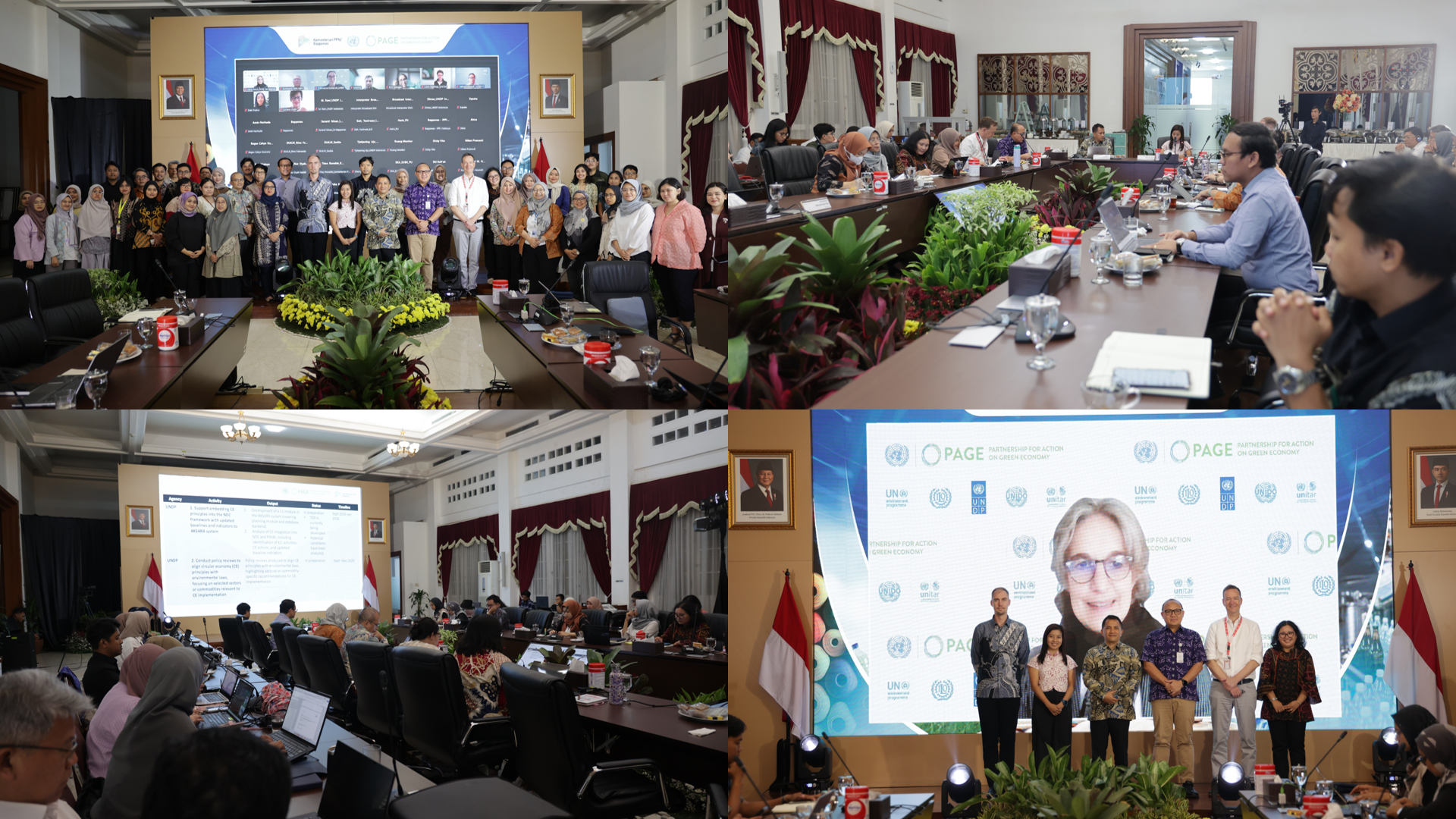
Jakarta, October 8, 2025 – A vibrant new chapter in Indonesia's sustainable development has officially begun with the Kick-Off Meeting of the PAGE Indonesia Phase II. This event, hosted by the Ministry of National Development Planning/Bappenas, was a powerful reaffirmation of national and global partnership, dedicated to translating Indonesia's circular economy blueprint into tangible results.
The guiding mandate for Phase II—"Accelerating Circular Economy Implementation through Climate & Finance Pathways"—is clear: to build an inclusive, resilient, and economically advanced Indonesia.
A Legacy of Leadership and Long-Term Vision
The strong foundation laid by Phase I (2018–2024) was celebrated, acknowledging the vision that embedded the circular economy into Indonesia's long-term planning. Deputy Minister Dr. Leonardo A.A. Teguh Sambodo highlighted how this work has paved the way for ambitious goals, including the roadmap for a 75% reduction in Food Loss and Waste (FLW) by 2045.
Ms. Vera Weick, Head of the PAGE Secretariat, emphasized that the collective strength of the five UN agencies is essential to success. The commitment of partners like the EU Delegation, which affirmed its continued role as a key funding partner, underscores the global confidence in Indonesia's trajectory.
The Core Mission: Integrated Action Pillars
The program's ambitious scope is powered by highly specialized, coordinated technical interventions designed to solve systemic challenges:
- Climate Alignment & Accountability (UNDP): The program will directly address climate goals by spearheading the integration of CE principles into the national NDC framework and AKSARA system. This critical work will provide the technical modules and analytical rigor needed to accurately quantify CE’s contribution to GHG reduction and ensure alignment with national data systems.
- Finance Mobilization (UNEP): Moving past reliance solely on public funds, UNEP is structuring innovative financing models and strengthening financial systems. This focus is vital for unlocking and directing private sector investment toward circular projects, leveraging mechanisms like blended finance and green bonds.
- Green Skills & Competency (ILO/UNITAR): Recognizing that a green economy needs a skilled workforce, the ILO will conduct intensive skills mapping in high-impact sectors like construction, aiming to close workforce gaps. Simultaneously, UNITAR will mainstream CE knowledge by integrating it into higher education curricula.
- Industrial Transition (UNIDO): UNIDO will conduct the definitive technological readiness assessment across industries, providing the clear data needed for manufacturers to adopt and scale circular practices.
Elevating Partnership for Maximum Impact
The dialogue with national stakeholders was immensely valuable, ensuring PAGE activities are precisely tuned to national strategic needs:
- Targeting Strategic Projects: Partners called for the program to strengthen its link to National Strategic Projects, particularly by assessing the economic viability of Waste-to-Energy (WtE) projects and aligning skills development with industrial greening mandates.
- Empowering the Workforce: Stakeholders advocated for extending skills development beyond new green jobs to upskill existing professional engineers and workers, ensuring the current workforce is equipped with the competencies needed for sustainable design and construction.
- Solving Market Barriers: The discussions highlighted the urgent need for technical support to resolve key barriers like achieving off-taker certainty and market viability for technologies like RDF, especially to enable successful deployment outside of major industrial centers.
This launch is a declaration of confidence in the future. By integrating world-class technical expertise with strong national leadership, PAGE Indonesia Phase II is set to deliver fundamental and lasting change.
The time for strategy has matured into the time for commitment. Through PAGE Phase II, Indonesia steps forward to decisively secure its future, converting ambitious policy into lasting prosperity and turning circularity into a competitive national advantage.